
What the first freeze does to a flower delivery
Somewhere around the third week of October, flower shops in the northern half of the country start adding a sentence to every delivery conversation. Will anyone be home? It sounds like small talk. It is not. A bouquet that would sit happily on a shaded porch for four hours in September can be ruined in forty minutes once the thermometer drops below freezing, and the damage often does not show up until the next morning, long after the driver has gone and the card has been read. Cold is the quietest way a perfectly good order goes wrong, and it is almost entirely preventable with a two-minute conversation at the counter.
What cold actually does to a cut flower
A petal is mostly water held inside thin-walled cells. When the air around it drops below freezing, that water starts to form ice crystals, and the crystals puncture the cell walls from the inside. Nothing looks dramatic while it is frozen. The flower may still look crisp and bright on the doorstep. The trouble arrives on thaw, when the ruptured cells leak and the petal goes translucent, glassy, almost wet-looking, then turns brown and limp over the following day.
There is a second, sneakier kind of damage that happens well above freezing. Tropical flowers evolved where it never gets cold, and they suffer chilling injury at temperatures that feel mild to us, somewhere in the 45 to 55 degree range. No ice forms. The cell membranes simply stop working properly, and the symptoms show up two or three days later as dark water-soaked patches, blackened edges, or buds that never open. Customers almost always blame the shop for those, because the flowers looked fine on arrival. The real culprit was twenty minutes in an unheated vestibule.
The stems that shrug it off and the ones that do not
Hardiness in cut flowers tracks fairly closely with where the plant came from and how thick its tissue is. Mums, carnations, alstroemeria, tulips, and most evergreens are tough. They grow outdoors in cold climates and their petals are relatively substantial. Roses sit in the middle: they survive a brief chill, but freeze marks show up as translucent rims on the outer petals that brown within a day, and a rose with a frozen neck will droop no matter how beautifully it was conditioned.
The fragile end of the scale is where the money usually is. Orchids, anthuriums, bird of paradise, ginger, and most other tropicals are the first casualties. Hydrangea and gardenia bruise easily. Open lilies and gerberas resent any sudden temperature swing. If you have spent extra on something exotic for a December birthday, that is exactly the arrangement you should not let sit outside.
| Tolerance | Typical stems | Rough danger zone |
|---|---|---|
| Tough | Mums, carnations, alstroemeria, tulips, greens, evergreen branches | Below about 28F |
| Middling | Roses, lisianthus, stock, snapdragons, daisies | Below about 33F |
| Delicate | Orchids, anthurium, bird of paradise, hydrangea, gardenia | Below about 50F |
The doorstep is the weak link, not the van
Delivery vans run warm in winter. Drivers keep the heat on, arrangements ride in crates with the water topped low so it does not slosh, and the trip from shop to door is usually measured in minutes. The hazard is the handoff. A bouquet left against a storm door at 3:40pm on a day that bottoms out at 25 degrees after dark has a long, cold evening ahead of it if the recipient is at work until six.
Apartment buildings add their own variation. An unheated lobby or a parcel room with a propped-open exterior door can hold at outdoor temperature all day. Package lockers are worse, because they are metal boxes outdoors, and most drivers will refuse to use them for flowers anyway. Porches with a south-facing exposure can swing the other direction and cook a bouquet in afternoon sun, which is its own problem in a different season.
Timing a winter delivery on purpose
In cold months, the best delivery window is the middle of the day. The air is at its warmest, the recipient is more likely to be reachable by phone, and the shop still has hours left to fix a failed attempt. The worst window is the last run of the afternoon, when temperatures are falling, the driver is racing daylight, and nobody is left at the shop to answer the phone if something goes sideways.
Ask for a morning or midday attempt and say why. Most shops route by geography rather than by clock, so a specific time is often impossible, but a general preference is usually easy to honor if you mention it when you order rather than two hours before. This is also an argument for ordering a day ahead in winter instead of relying on a same-day squeeze. Shops can and do pull off remarkable last-minute runs, and our piece on how same-day delivery actually works explains the mechanics, but the last stop of a packed winter route is the one most likely to end up on a frozen step.
What to tell the florist when you order
The single most useful thing you can provide is a working cell number for the recipient, plus permission to use it. Shops hate spoiling surprises and will not call unless they have to, but a driver standing on a dark porch with a box of orchids and no answer at the door has exactly two options, and one of them is leaving your gift to freeze.
Beyond that, tell the shop anything you know about the recipient's schedule. Works nights. Teaches until three. Lives in the back unit behind the main house. Has a side door the mail carrier uses. Dog in the yard. Gate code. These details sound trivial and they are the difference between a delivered arrangement and a second attempt tomorrow. A quick phone conversation carries all of it in thirty seconds, which is one of several reasons calling the shop beats the checkout form, especially in a month when the weather is part of the order.
How shops protect flowers on a cold route
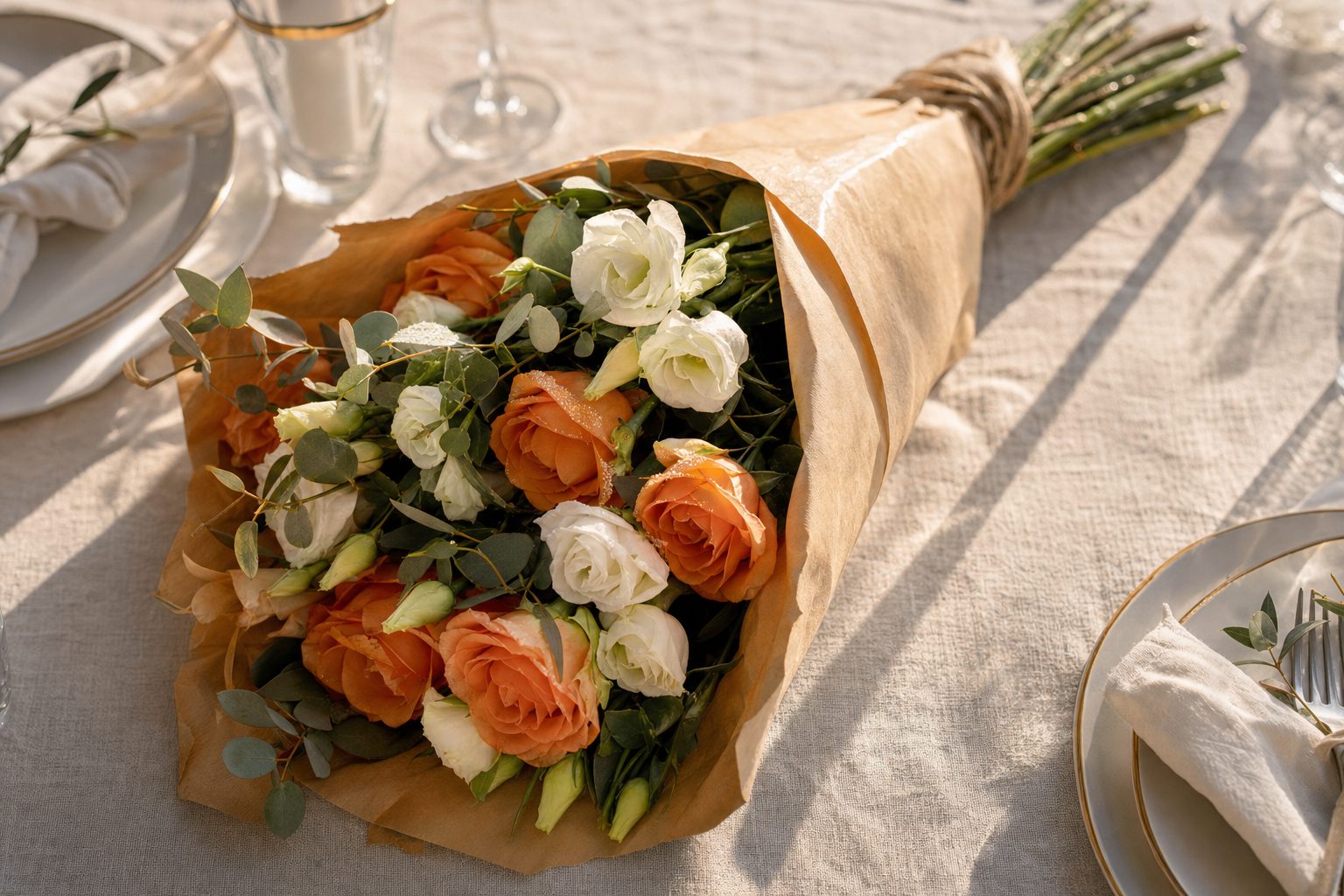
Watch a shop load out on a January morning and you will see the adaptations. Arrangements get a clear sleeve or a kraft wrap over the top, which does almost nothing for insulation but blocks wind, and wind is what strips heat from petals fastest. Boxed arrangements travel better than open ones. Some shops throw a moving blanket over the crate for long rural runs. Drivers stop shutting the van off between houses.
Shops also substitute on purpose in deep winter. A designer building a 75 dollar arrangement for a 20 degree delivery day will lean toward roses, mums, carnations and conifer rather than orchids and anthurium, not because they are cheaper but because they survive the trip. If you ordered something specific and got a note about a swap, that is often weather, not inventory. The supply calendar guide covers the rest of why availability shifts month to month.
Reading a bouquet that arrived cold
Frost damage has a signature. Look at the outermost petals first, since they chill before anything else. Translucent patches, a wet or oiled appearance, edges that have gone grayish rather than brown, and tips that feel limp between your fingers all point to freeze. On roses, it often shows as a dark ring around the outer guard petals. On tulips and lilies, the whole flower can go slack while the leaves still look fine.
Chilling injury on tropicals looks different: dark, sunken, water-soaked blotches on an orchid lip or an anthurium spathe, appearing a few days after delivery. Buds that stay stubbornly shut and then drop are the same story. If you see either of those, the flower is not going to recover, and no amount of flower food will bring it back.
First aid for a chilled arrangement
Bring it inside and leave it somewhere cool, not warm. The instinct is to put a cold bouquet in a hot room or run warm water over the stems, and that fast swing does more harm than the cold did. A 60 degree hallway for an hour is kinder than a 74 degree kitchen next to the radiator.
Once it has come up to room temperature, treat it like any new arrangement. Recut stems at an angle, refresh the water with flower food, and pull any leaves below the waterline. Outer petals that went glassy should come off, since they will rot and foul the water. Guard petals on roses are designed to be removed anyway, and a rose that lost two of them often looks better afterward. For the rest of the vase routine, including which tricks actually hold up, our tested vase life guide saves you from the penny-and-aspirin folklore.
Keep the vase away from heat sources all winter. Forced-air vents, wood stoves, radiators and the top of a running refrigerator are all vase life killers, and in a heated house the air is dry enough that flowers lose water faster than they did in August. Topping up the vase every day matters more in December than it does in June.
Plants are more cold-sensitive than bouquets
Living plants travel worse than cut flowers in winter, because the damage is systemic rather than cosmetic. A poinsettia exposed to under 50 degrees for even a short walk from car to door will drop leaves days later. Orchids chilled below the low fifties will blast their buds, dropping unopened flowers one by one while the plant itself looks healthy. Succulents mush. Tropical foliage plants develop black patches along the leaf margins.
Good shops sleeve plants fully for winter delivery and will tell you to carry them inside quickly if you are picking up. If you are buying a gift orchid this season, it is worth knowing what the plant needs in its first weeks indoors, which our orchid first year plan lays out month by month. The short version for October: warm room, bright indirect light, nowhere near the front door.
Shipped boxes versus a local van in January
Flowers mailed in a carton face a different set of risks than flowers delivered by a shop. The box travels in cargo holds and sorting facilities with no temperature control, sits on trucks overnight, and often lands on the porch at the same moment the local forecast bottoms out. Shipping companies pack with cold packs in summer and sometimes insulating liners in winter, but a two-day transit through a cold snap is a coin flip.
A shop ten minutes from the recipient has a van, a heater, and a phone number for the house. That is the entire argument. If you want the arrangement to arrive at a specific address on a specific cold day, find the shop closest to the door it is going to and work with them directly. The directory exists for exactly that lookup, town by town.
Who pays when the weather wins
Policies vary, and the fair answer depends on who made the call. If the shop left an arrangement unattended on a freezing porch without authorization, most will remake it without argument, because that is their error and they know it. If you instructed them to leave it regardless, or the recipient brought it in late, the shop is within its rights to charge for a replacement, though plenty will split the difference out of goodwill.
Storms are their own category. Shops cancel routes for ice and blizzards, and when they do, they will typically hold your arrangement in the cooler and deliver the next passable day, or rebuild it fresh if the delay runs long. Call if the date actually matters, like a funeral or a flight out, and say so plainly. A designer who knows a delivery is time-critical will find a workaround, including handing it off to a staff member who lives in that direction.
Building a bouquet that likes the cold
October and November happen to be good months for durable material anyway. Mums, carnations, alstroemeria and hypericum are all frost-tolerant and all look right in autumn colors. Woody stems, seed pods, dried grasses and evergreen tips handle the cold better than anything with soft petals, and they keep their shape for weeks, which is the case our post on branches, berries and pods makes at length.
If the delivery address is somewhere genuinely cold and the recipient is genuinely unreachable, tell the designer to build for the weather. Ask for a boxed or wrapped arrangement rather than an open vase. Skip the orchids. Take the mums, which will outlast the exotic option by a week anyway. A designer given that brief will make something beautiful, because durability and beauty are not opposites in autumn. They are practically the same list of stems.
Cold weather does not make flowers a bad idea. It makes them a planned idea, which they should have been all along.