
Why your bouquet dies faster once the furnace comes on
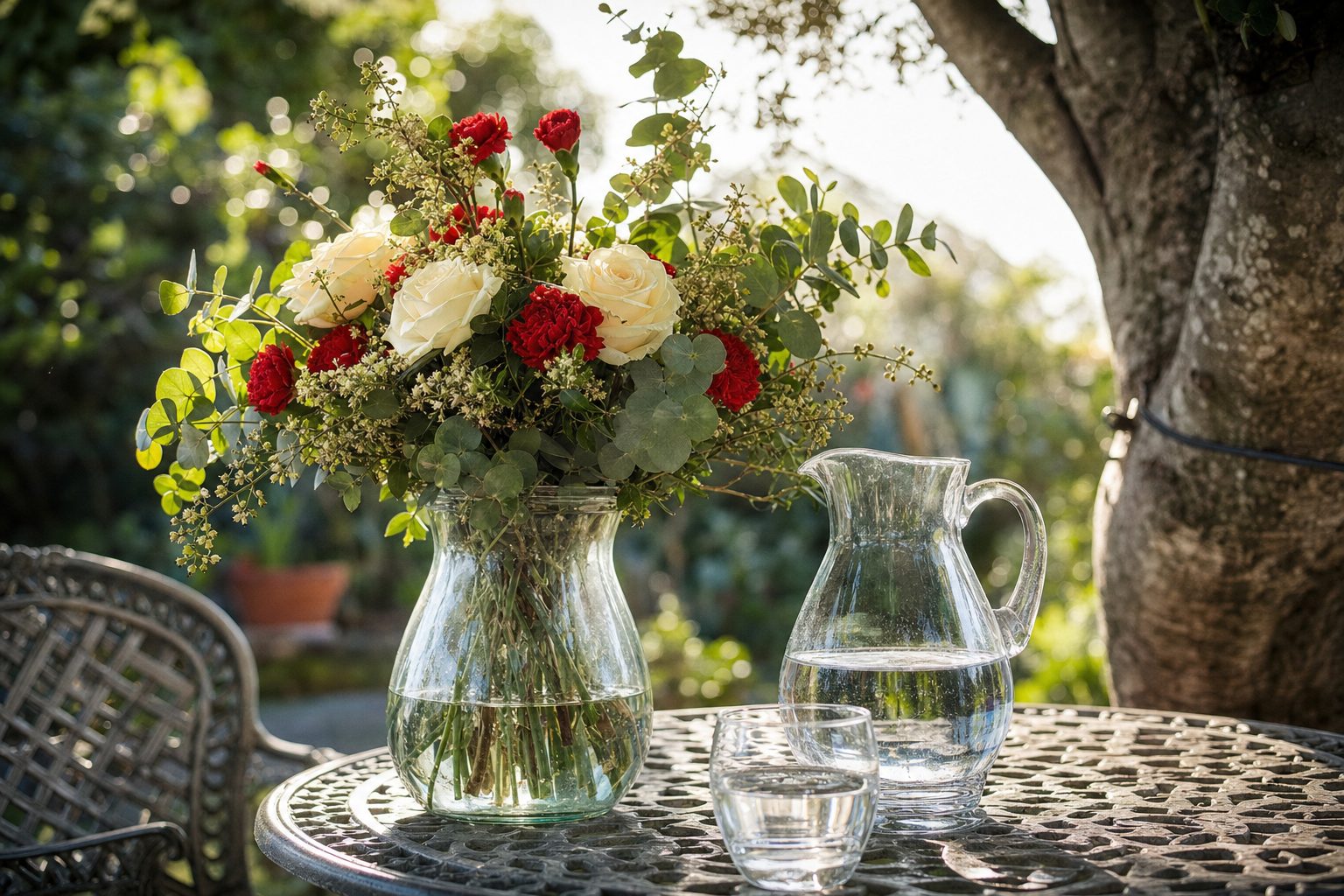
Every November, flower shops get a run of the same phone call. The customer is not angry, just puzzled. The bouquet they bought in September lasted nine days on the same table, and the one they bought last Tuesday collapsed by Saturday. Same shop, same roses, same vase, same tap water. What changed was not the flowers. It was the thermostat. Somewhere between the last warm week and the first real cold snap, the furnace kicked on and your living room quietly turned into a desert with lamps.
This is the least glamorous and most useful piece of flower care knowledge there is. Heat and dry air do more damage to a winter bouquet than old stems, bad water or anything a florist did or did not do. Once you understand the mechanics, you can add three or four days to almost every arrangement you bring home between now and April, without buying a single product.
What dry heat actually does to a cut stem
A cut flower is still alive and still breathing. It loses water through its petals and leaves constantly, a process called transpiration, and it replaces that water by drawing it up the stem. Vase life is essentially a running argument between those two rates. When the flower pulls up as much as it loses, it stays turgid, firm and open. When loss outruns uptake, petals go papery at the edges, heads droop, and the whole thing wilts even though the vase is full of water.
Warm, dry air accelerates the loss side of that equation dramatically. Forced air heating does not just raise the temperature, it strips moisture out of the room. A house that sat at 50 to 60 percent relative humidity in September can run at 20 to 30 percent in January with the heat going day and night. That is drier than a lot of desert air. Your skin knows it, your houseplants know it, and your roses know it first, because they have no roots and a limited reservoir.
Temperature compounds the problem independently. Flowers respire faster when warm, burning through stored sugars more quickly and opening on a shorter clock. A rose at 65 degrees will open over several days in a controlled, pretty way. The same rose two feet from a heat vent at 78 degrees blows open in a day and a half and then starts shedding. This is why florists keep coolers at 34 to 38 degrees and why a bouquet left in a warm car behaves so badly. Cold slows the whole metabolism down. Heat speeds it up and charges you for the privilege.
The hot spots in your house that you never think about
Before you change anything else, walk through your home and find the places where flowers go to die. Most people place a vase where it looks best, which is frequently the worst possible spot thermally. The mantel above a working fireplace is a slow roast. The top of the television or a cable box sits in a column of warm exhaust air. A windowsill over a baseboard radiator gets heat from below and a cold draft from above, which is the worst of both worlds. Kitchen counters near the stove, dining tables directly under a ceiling vent, and the shelf above a woodstove all qualify.
Direct winter sun is sneakier than summer sun because it feels pleasant. The angle is low, the light comes deep into the room, and a glass vase sitting in it acts like a small greenhouse. Water heats, bacteria multiply faster, and the flower on the sunny side opens days ahead of the one in shade. If you want the bouquet in that window because the light is lovely, enjoy it there during the day and move it somewhere cooler at night. Flowers do not mind being relocated. They mind being cooked.
The best spot in most heated houses is an interior wall, away from vents, out of direct sun, in a room you do not overheat. North facing rooms, entry halls, and guest bedrooms are often perfect. If your house has a chilly corner that nobody likes to sit in, congratulations, you have a florist's cooler.
The cold side of the problem, which is just as real
Winter does not only threaten flowers with heat. Between the vent and the window glass there is a zone that drops close to freezing on a hard night, and tropical flowers hate it. Orchids, anthurium and tropical foliage show chilling injury as translucent, water soaked patches that turn brown within a day. A bouquet pressed against a single pane window overnight can come back with petals that look bruised on one side only. The telltale sign is that the damage has a shape, a flat face or a clean line where the flower touched the glass.
The same physics applies on the way home from the shop. A ten minute walk to the car with an unwrapped bouquet in 20 degree air will mark tulips and anemones, and the damage does not appear until the flowers warm up. This is why florists wrap heavily in winter and why a good shop will ask whether you are heading straight home. We went into the delivery side of this in what the first freeze does to a flower delivery, and the household version is the same lesson at smaller scale. Keep the flowers in the middle of the temperature range, not at either edge.
Water, and why winter bouquets drink like athletes
In July, a vase in a cool house might drop half an inch of water a day. In a heated January room, the same arrangement can pull down an inch or two, and a thirsty bouquet with hydrangea or large foliage can empty a shallow vase overnight. The single most common cause of a winter bouquet dying early is not disease or old stock. It is a vase that ran dry at 2am while everybody slept and the stems sealed up.
Check the water every single day in winter, and top it up every single day. Do not wait for it to look low. If you are using floral foam in a designed arrangement, which most delivered pieces use, the foam needs topping even more attentively, because it wicks and evaporates and a dry foam cage is very hard to rehydrate once it has pulled away from the stems. Pour slowly into the lowest point of the container until you see water sitting at the surface, then stop.
Use lukewarm water, not cold. Warm water moves up a stem faster because it is less viscous and holds less dissolved air to block the vessels. Cold water is fine for bulb flowers like tulips, daffodils and hyacinth, which prefer it, but everything else appreciates water at roughly room temperature. And use the flower food packet. In dry conditions the sugar in that packet matters more, because the flower is burning energy faster and getting none of it from a plant.
Humidity, misting and what actually helps
Raising the humidity around the flowers is the most direct counter to furnace air, and a few approaches genuinely work. Grouping plants and flowers together creates a small humid pocket, which is why a bouquet on a table with two houseplants does measurably better than one alone on a bare sideboard. A shallow tray of water with pebbles under the vase helps a little. Running a humidifier in the room helps a lot, for you and the flowers both.
Misting is more complicated than the internet suggests. A light mist on sturdy foliage and tight buds in a very dry room does buy time. A heavy mist on open roses, lisianthus or anything with soft petals leaves standing droplets in the petal folds, and in a warm room that is an invitation to botrytis, the grey mold that shows up as brown freckles on white petals. If you mist, do it in the morning, do it lightly, and aim at the greens rather than the faces. We put this and plenty of other household advice through the wringer in eighteen vase life tricks, tested, including the aspirin, the penny and the splash of vodka.
The overnight relocation trick is the one that genuinely earns its reputation. Move the vase to the coolest room in the house before bed, an unheated porch, a cold spare room, the garage if it will not freeze. Eight hours at 50 degrees rather than 70 slows everything down and can add several days across the life of the bouquet. Restaurants and event designers do a version of this constantly, holding arrangements cold until the last moment.
Which flowers shrug off a hot house and which ones sulk
Some stems are built for dry warmth and some are not, and knowing the difference changes what you ask for in December. Thick petalled, low moisture flowers tolerate heat well. Thin petalled, high surface area flowers suffer.
| Handles a heated room well | Struggles in dry heat |
|---|---|
| Carnations and mini carnations | Hydrangea |
| Chrysanthemums | Tulips (stretch and flop) |
| Alstroemeria | Anemone and ranunculus |
| Protea and leucadendron | Sweet pea |
| Amaryllis | Garden roses (blow open fast) |
| Statice, limonium, dried accents | Open peonies and poppies |
Hydrangea deserves a special note because it is the flower most likely to break a customer's heart in winter. It drinks through its petals as much as its stem, and in a dry heated room it collapses in hours. If it wilts, submerge the entire head in cool water for twenty to thirty minutes and it will often come back from the dead. Keep it away from vents entirely, and do not buy it for a mantel.
Chrysanthemums, meanwhile, are the unglamorous champion of furnace season, which is one more reason they deserve a fairer hearing than they usually get. Carnations likewise. A December arrangement built on carnations, mums, alstroemeria and good evergreen foliage will still look presentable when the delicate stuff has been composted for a week.
The holiday table is a hostile environment
Thanksgiving and the December holidays put flowers into the most punishing conditions of the year, and it happens on exactly the day you most want them to look good. Candles throw heat directly upward into the arrangement above them. Chafing dishes and warming trays do the same. The oven has been running for six hours, the house is full of people generating body heat, and somebody turned the thermostat up because the hall was chilly.
Then there is the fruit bowl. Ripening apples, pears, bananas and tomatoes release ethylene gas, which is the aging hormone for most flowers. Carnations close up and go to sleep, delphinium and snapdragons shed florets, and lilies drop buds. Keep fruit off the table where the flowers live, or at least at the far end. If you are arranging a centerpiece on the morning of the dinner and then moving it to a cool room until guests arrive, you are doing exactly what a professional would do. For the longer planning version of holiday table flowers, we laid out the ordering timeline in Thanksgiving table flowers, ordered a month out.
Evergreens and wreaths dry out too
Cut greens follow the same rules, and people forget it because the branches look sturdy. A fresh fir or cedar garland draped over an interior mantel with a fire going underneath will be shedding needles within ten days. The same garland on a covered porch in 35 degree air will still be soft and green in January. Indoor greens need misting, and they need to be away from heat sources, and they are a genuine fire consideration once they are dry enough to crackle.
If you are ordering fresh greens this season rather than buying the preserved or artificial version, plan the indoor placement before you hang anything. Over a doorway on an interior wall is good. Wound around a stair rail in a cool hall is good. Directly above a radiator is a two week decoration you paid for as a six week one. The ordering side, including why shops want your greens order early, sits in the greens order you should place in November.
What to ask the shop when you order in winter
Florists know all of this, and most will happily tailor the arrangement if you tell them where it is going. That is one of the real advantages of talking to the person who will actually build the thing. A few sentences worth saying on the phone or at the counter.
- Tell them the room. "This is for a mantel over a working fireplace" or "it will sit on a radiator shelf" will change what goes in the vase, and a good designer will steer you toward heat tolerant stems without being asked twice.
- Ask how it has been conditioned. Stems that have been cut, hydrated and held cold for a day before sale are better prepared for a dry room than stems that went from box to bouquet in twenty minutes.
- Ask for a deeper container. Tall narrow vases hold more water than wide shallow bowls and run dry less often, which matters more in January than in June.
- If it is a gift being delivered, ask what the driver does if nobody is home. Leaving a vase on a porch in freezing air for three hours undoes everything.
- Ask whether they have anything that improves with dryness. Dried and preserved elements, seed pods, grasses, eucalyptus and strawflower hold up indefinitely in heated air, and mixing them into a fresh arrangement gives you a piece that still looks intentional after the fresh stems fade.
That last point is worth taking seriously in deep winter. A mixed fresh and dried arrangement is honest about the season. The fresh flowers do their nine days, you pull them out, and the pods, grasses and branches carry the container until you refresh it. It is also a genuinely economical way to buy flowers between the holidays and spring, when fresh stems are at their most expensive and the weather is at its least cooperative.
Reviving a bouquet that the furnace got to first
If you come home to droopy heads and a half empty vase, do not throw it out yet. Most heat stress is recoverable if the stems have not been dry long. Take everything out, strip the lower leaves again, and recut every stem at a sharp angle, removing at least an inch. Air locks form in the vessels when a stem runs dry, and the only fix is a fresh cut underwater or at least a fast one, straight into deep lukewarm water.
Then give the whole thing an hour somewhere cool and shaded, with the stems standing in water nearly up to the flower heads if the container allows. Roses respond to this almost theatrically, lifting their necks within the hour. Woody stems like lilac and viburnum may need warm water and patience. Tulips that have bent can be rolled snugly in newspaper, stood in deep water for an hour or two, and will often come out straight. If a few stems are genuinely finished, pull them and rebuild the arrangement smaller in a shorter vase rather than leaving gaps. There is a full recovery timeline in our guide to saving a bouquet, from the first hour to the first year, and a day by day account of how roses behave under household conditions in the two week rose diary.
The habit that does most of the work
None of this requires equipment or expertise. Pick a cool spot away from the vents. Top the water every morning while the coffee brews. Keep fruit and candles at a polite distance. Move the vase somewhere chilly overnight when you remember, and do not panic when you forget. Those four habits are worth more than every additive and trick combined, and they are the reason a florist's own kitchen bouquet outlasts yours by a week.
Winter flowers are also, quietly, the best value of the year in terms of what they do for a house. A bouquet in June competes with a garden. A bouquet in February competes with four months of grey. Buy them, place them thoughtfully, and call a shop near you to find out what is coming in fresh this week, because the person answering that phone has been fighting dry indoor air since the day the furnace came on and has opinions about which stems win.