
Proposal flowers, and why florists brace for the week after Thanksgiving
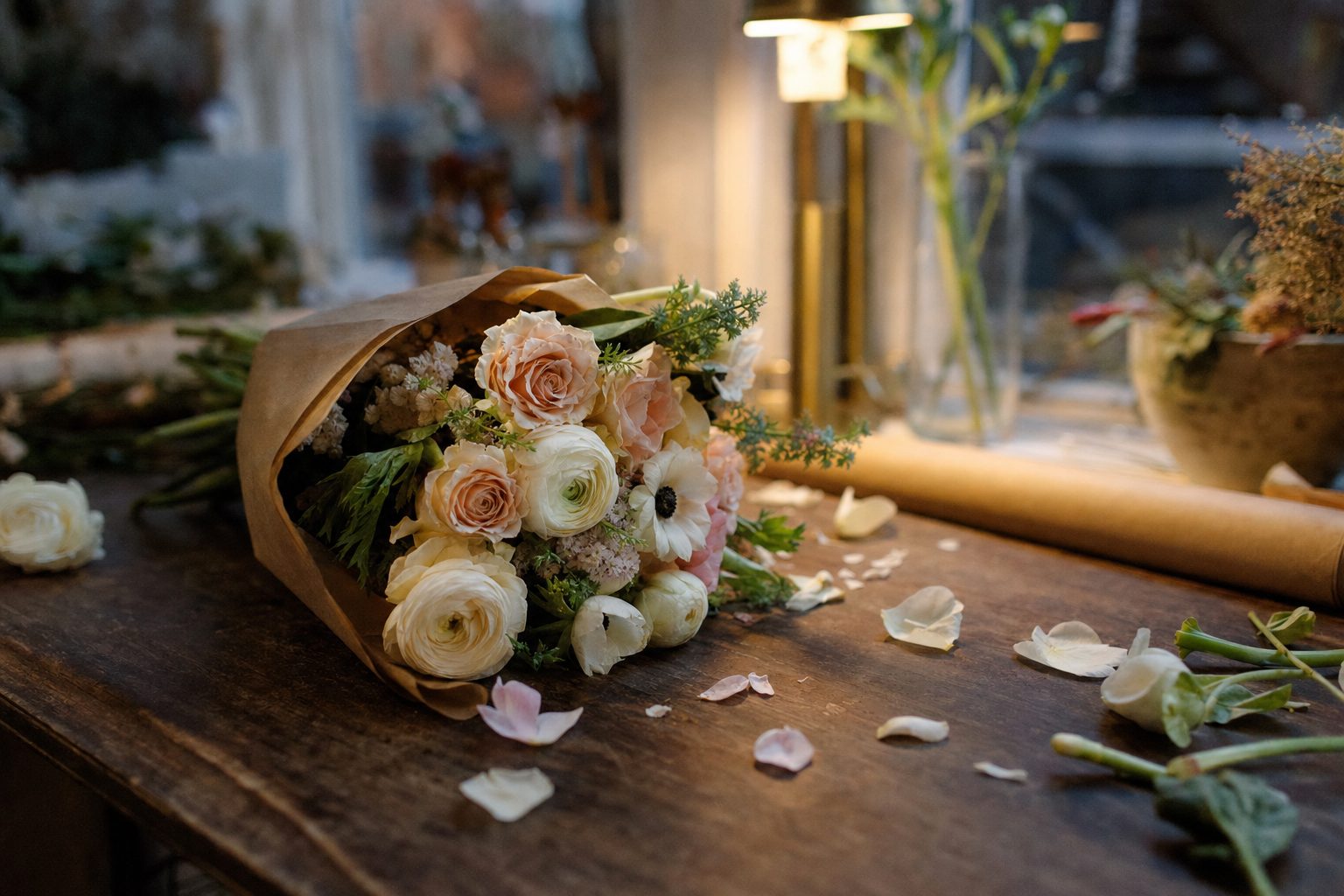
Somewhere this week, a florist is going to answer the phone and hear a person breathing a little too fast. The caller will say they need flowers for Saturday, that it has to be perfect, that it is a surprise, and then they will go quiet and say the actual thing: they are proposing. Shops know this call. They get it all through late November, December and January, because the stretch between Thanksgiving and Valentine's Day is when an enormous share of American proposals happen. Families are already gathered. People are off work. There is a ring that has been sitting in a sock drawer since August and a person who cannot stand to wait another day.
Proposal flowers are their own small discipline. They are not a centerpiece, not a sympathy piece, not a dozen roses in a box for an anniversary. They have to be carried, photographed, held by someone who has just been handed an enormous emotional surprise, and they have to survive a car in November weather. Here is how to order them well, and what the person behind the counter wishes you would mention before you hang up.
Why the shop's December calendar fills up with secrets
Flower shops run on a rhythm, and November through January is the loudest stretch of it outside Valentine's and Mother's Day. The greens and wreath orders land first. Thanksgiving centerpieces go out the Tuesday and Wednesday of that week. Then, almost immediately, the proposal calls start, braided in with holiday party work and December funerals and the corporate accounts that want something festive in the lobby.
What that means for you is practical. A designer who is building forty holiday arrangements on a Friday is not necessarily free to hand-tie your bouquet at 4 p.m. that same day, and the small clever thing you want (loose petals, a single stem wrapped in velvet ribbon, a bouquet that matches a photo you saved in March) takes ordering. Most shops buy their fresh stock twice or three times a week. If you call Monday for Saturday, you are ordering into a delivery they have not placed yet, which is exactly where you want to be. If you call Friday afternoon for Friday evening, you are shopping the cooler, and the cooler in December is full of red and green.
What a proposal bouquet actually has to do
Think about the next ninety minutes of that bouquet's life, because that is the design brief. It gets carried, often hidden, sometimes stashed behind a bench or handed to a friend crouching in a car. It gets held with one arm while the other arm hugs. It appears in photographs taken by a friend hiding behind a tree, or by a photographer you hired, or by nobody at all. It then rides home on a lap and lands on a kitchen counter at midnight.
So: it should be light. A huge presentation sheaf looks spectacular in a store and feels like carrying a toddler after six minutes. It should have a clean grip point, stems bound and wrapped so nobody gets thorn-stuck or soaked. It should not shed catastrophically. And it should read from ten feet away, because that is the distance of every photo taken that day. Tell the florist all of this. "It needs to be carried and photographed outdoors at dusk" changes what they build far more than a color request does.
Colors that survive a camera at four in the afternoon
Winter light is short and blue. By late afternoon in most of the country, you are working with about an hour of usable light, and deep burgundy, plum and true red all go black in it. If you are proposing outdoors in December, white, blush, cream, peach and soft coral will hold their shape on camera long after the dark tones turn into a smudge. A bouquet of ivory garden roses photographs beautifully at twilight. A bouquet of dark red ones photographs like a shadow.
None of this means you must abandon red. Red roses carry a meaning that everyone on earth understands instantly, and that is worth something on a day built entirely of meaning. Indoors, with warm lamps, red is gorgeous. Just make the choice knowingly rather than by default, and if you want help translating a feeling into stems, our guide on how to start with the message and end with the bouquet is a decent place to think it through before you call.
The stems that behave under pressure in November
Cold-season flowers are, happily, some of the prettiest things a florist handles all year. Ranunculus and anemones are back in good supply from late autumn onward and they are perfect proposal flowers: layered, soft, a little old-fashioned, and sturdier than they look. Garden roses give you fragrance and that open, painterly face. Standard roses are reliable and will hold out of water longer than almost anything else in the shop.
Tulips are the one to think twice about. They are beautiful and they are everywhere in winter, and they also keep growing after they are cut and bend toward light, which means a tight hand-tied bouquet of tulips can look noticeably different two hours later. For a proposal in a restaurant, that is fine. For a bouquet that has to sit in a car for three hours while you wait for the right moment, choose something with a stiffer spine. Peonies, which people ask for constantly, are out of the domestic season now, though imported ones do appear around the holidays at a price that will make you blink. Ask what the premium is before you commit.
Hydrangea is another one to handle carefully. It drinks through its petals as much as its stem and wilts fast out of water. If you love it, ask the florist to keep the stems in a water tube and to condition the heads hard the night before.
Loose petals, arches and the requests shops get asked about most
Rose petals on a floor or a trail of them down a hallway is one of the most common proposal requests, and it is easier to order than people think. Shops sell them by the bag or the box, often from petals stripped off roses that are opening past their prime, which is why it is worth asking a couple of days ahead rather than the morning of. A single bag covers less ground than you imagine. A path, a bed and a scatter of petals on a table is usually two or three bags, somewhere in the range of twenty to fifty dollars depending on your town. Freeze-dried petals cost more but will not bruise or stain, which matters on pale carpet.
Bigger installations (a flower arch, a letter wall, a staircase garland for a proposal at home) are event work, not counter work. Some shops do it beautifully, some will politely refer you to a designer they trust, and either answer is honest. Expect those to start in the several hundreds and to need at least a week, plus a conversation about who installs, who strikes it afterward and whether the venue or the park allows it at all. Public parks and city plazas frequently require a permit for anything staked or freestanding. Ask before you fall in love with a Pinterest photo.
How to keep the surprise intact when you order
Florists are extremely good at secrets, but only the ones they know about. Say it out loud: this is a surprise proposal. That one sentence tells the shop not to call the recipient to confirm an address, not to post the bouquet on social media before Saturday, not to leave a voicemail at the house, and to put a neutral name on the order ticket if you share a household.
A few practical moves that have saved proposals:
- Pay in full when you order, so no card receipt surfaces at the wrong moment, and ask for the receipt by email rather than text if you share a phone screen.
- If the shop delivers to a restaurant, give them the restaurant's phone number and the name the reservation is under, and ask the driver to hand off to the host or manager rather than leaving flowers on a table.
- Arrange pickup at a time your partner is accounted for, and if you share a car, ask whether the shop can hold the bouquet until the last possible hour.
- Tell the florist the proposal time, not just the pickup time. They will condition and wrap differently for a bouquet that must look fresh five hours later.
Call rather than click. A proposal order has six variables that no web form asks about, and the whole thing goes better when a human hears the plan. We have made the longer case for picking up the phone instead of the website, and this is the single order where it matters most.
What your budget actually buys
Prices vary enormously by town, so treat these as broad honest ranges rather than a quote. A proposal bouquet does not need to be the most expensive thing in the shop, and plenty of the best ones are small.
| Roughly | What that tends to get you |
|---|---|
| $25 to $50 | A single statement stem wrapped properly, or a small hand-tied posy of seasonal flowers in one color story |
| $75 to $150 | A full hand-tied bouquet with garden roses or ranunculus, good foliage, proper ribbon, built to be carried and photographed |
| $200 and up | A large designer bouquet with premium or imported stems, plus petals, plus a second arrangement waiting at home |
If you want a more detailed breakdown of how florists price work at different levels, our guide to what 40, 85 and 175 dollars buy at a real florist walks through where the money goes. The short of it: the stems are maybe a third, the rest is labor, wastage, cooler space and the skill of the person tying it.
The car problem, and other winter logistics
Flowers hate two things in November: a hot dashboard vent and a freezing trunk. Below about 32 degrees, petals take on ice damage that does not show up for a few hours and then shows up as brown, translucent edges on every outer petal. A bouquet left in a cold car while you have dinner is a bouquet you will be apologizing for at dessert.
Keep the flowers in the cabin, out of direct heat, lying flat across a back seat rather than standing in a cup holder. If there is a long gap between pickup and proposal, ask the shop for a water tube or a small bucket with two inches of water and keep it somewhere cool but not frozen, like a garage that stays above freezing or a friend's entryway. We have written more about what the cold does to a flower delivery, and the same physics apply to a bouquet riding around in your Subaru.
One more thing, said gently: do not hide the ring inside the bouquet. It happens, it is cinematic, and it is also how rings end up in the gaps between deck boards. Let the flowers do the flowers' job.
The flowers that come after the yes
Half of the proposal orders a shop fills are not for the proposal at all. They are for the mother who has been waiting for this call, the grandmother in the care facility who will tell every single person on her hall, the future mother-in-law who deserves to feel included on day one, and the friend who crouched behind a tree with a camera for forty minutes in the cold.
These can be small and they will land enormously. A twenty-five to forty dollar arrangement delivered the next morning with a card that says "she said yes, and we wanted you to hear it from flowers too" is the kind of thing people remember for decades. If the recipients live in other towns, call a shop near each of them rather than ordering everything from one place and letting it get farmed out. Searching the directory for a florist in the recipient's actual town takes about ninety seconds and means a real person in that zip code is making and driving the flowers.
If the engagement turns into a wedding order
Plenty of newly engaged people walk back into the same shop a few weeks later holding a date. That is a lovely thing for a florist, and it is also a relationship worth building slowly rather than all at once. You do not need to book wedding flowers in the first month. You do need to know roughly what season your date lands in, because the date decides more about your bouquet than any mood board will, and because popular shops take a limited number of weddings per weekend.
When you are ready, our twelve-month wedding flower countdown lays out when to actually do what, from the first consultation to the morning-of delivery. For now, pay the shop that made your proposal bouquet a compliment and let them know it worked. Florists almost never find out how the story ended, and they want to know.
When the plan changes at the last minute
Proposals get rained out, flights get delayed, the restaurant loses the reservation, the moment stops feeling right and gets moved to Sunday. Flowers are flexible if you tell the shop early. Most will happily move a pickup a day, hold a bouquet in the cooler, or rebuild a tired piece at a small charge. Very few will be annoyed. They have seen every version of this.
If the delay happens after you already have the flowers, keep them in water, somewhere cool and away from fruit, and recut the stems before the real moment. Roses will give you four or five good days of that. If you need to start fresh on short notice, call in the morning rather than the afternoon, and read up on how shops actually manage same-day work so your ask lands in the realm of possible.
The flowers are not the point and everyone knows it. They are the thing that makes the point visible, the object the two of you will be holding in the photo your nephew takes sideways with a thumb over the lens, the thing that ends up pressed flat in a book twenty years from now. Order them from somebody down the road who will tie them by hand on a Friday morning, tell that person the truth about your plan, and then go be nervous in peace.