
From the shop counter
Practical, cheerful flower writing three times a week: what is fresh, what it should cost, what to send and how to keep it alive. Written from the florist's side of the counter.
Latest posts
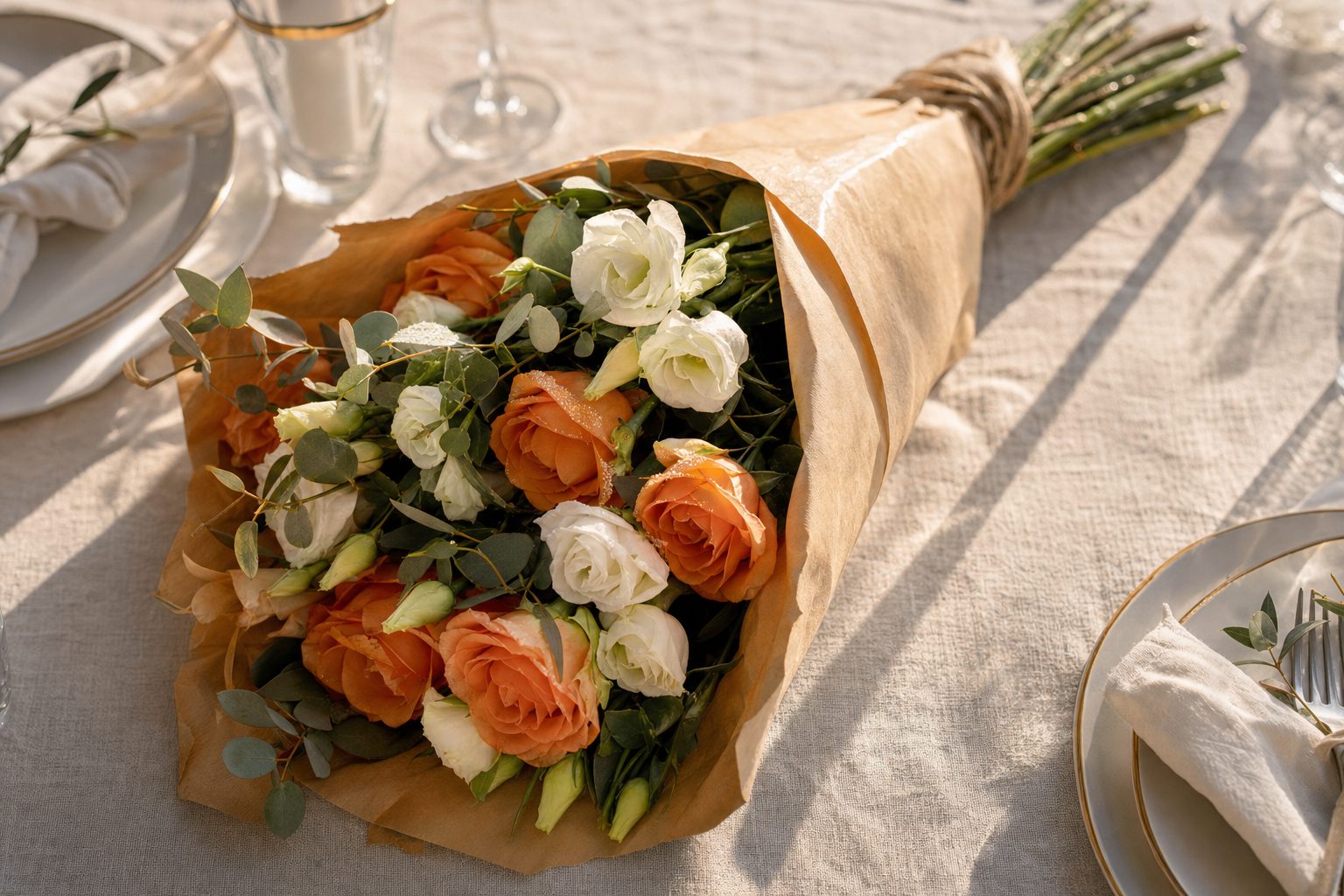
What the first freeze does to a flower delivery
Cold snaps wreck more bouquets than bad driving does. Here is how frost damages cut flowers, which stems shrug it off, and what to tell your florist.
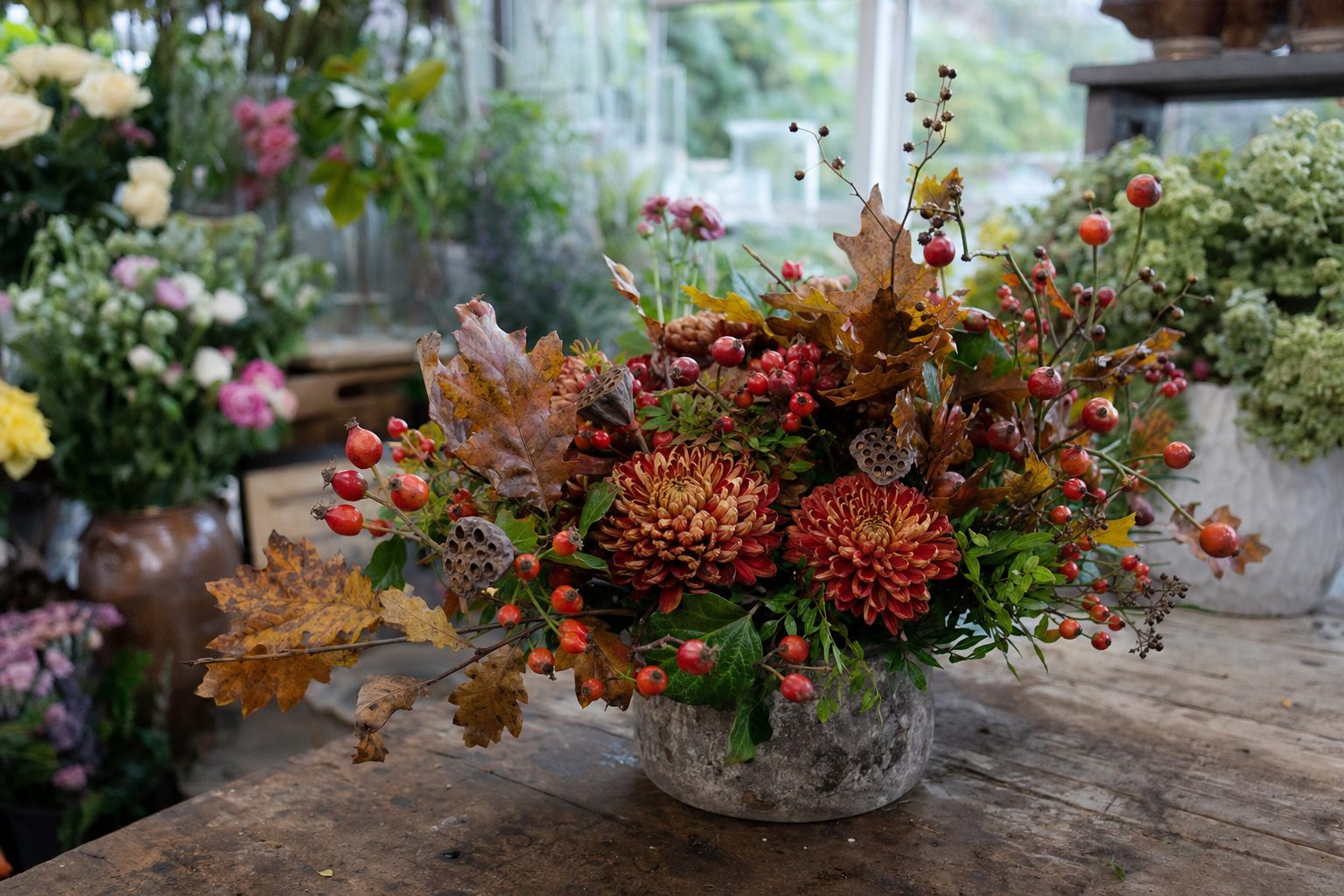
Berries, branches and pods, the October stems that outlast the flowers
Mid-October is peak season for hypericum, rose hips, oak branches and seed pods. Here is how to buy them, keep them and ask your florist for them.

Dahlias in October, and the race against the first frost
October is the last call for dahlias. Here is why they stay local, how to buy them so they last, what they cost, and what fills the bucket once frost arrives.

Marigolds, cempasúchil and the flowers of Día de los Muertos
Late September is when to call your florist about marigolds for November 1 and 2: what to order, how much, and how ofrenda and cemetery flowers actually work.

Chrysanthemums deserve better than the garden center parking lot
Mums are the workhorse of autumn: cheap, long-lasting and badly misunderstood. Here is what to know about types, meanings and how to order them well.

Why calling a flower shop beats its website
Why a two-minute phone call gets you better flowers than any order form, plus exactly what to say, what to ask, and when the website is actually fine.

Sending flowers to a hospital, a funeral home or a school without a hitch
A shop-counter guide to institutional deliveries: what hospitals, funeral homes and school offices actually allow, and what to tell your florist on the phone.

Standing orders, from the office lobby to the weekly 30 dollar bouquet
How weekly flower orders actually work at a real shop: what they cost, what to specify, vase swaps, holiday bumps and how to set one up by phone.

Grocery store flowers versus flower shop flowers, an honest comparison
A florist-counter look at how supermarket bunches and flower shop bouquets really differ in sourcing, freshness, price and vase life, and when each one is the right buy.

How to tip, thank and keep the florist who saved your anniversary
What florists actually appreciate after a last-minute rescue: how much to tip, who to tip, and the free gestures that turn a one-time order into a real relationship.

The flowers a shop wishes you would ask for this month
September is peak dahlia, zinnia, and antique hydrangea season. Here is what your local florist has too much of right now, and what to stop asking for.

What happens to your order when the local florist you called is not local at all
Order gatherers buy town names and phone numbers, then sell your order to a real shop for a fraction. Here is how it works and how to spot it.

Buying flowers for someone whose taste you do not know
How to order flowers for a person whose style is a mystery: what to tell the florist, which blooms rarely offend, and how context beats guesswork.

How flower shops pull off same-day delivery, and when to ask
A shop-counter look at how local florists run same-day delivery, the cutoff times that really matter, and how to ask so your order makes the van.

Why the same bouquet costs 45 dollars in one town and 85 in another
A shop-counter look at what actually sets flower prices: freight, rent, box minimums, design time, delivery miles, and the middlemen you can skip.

How to tell whether a bouquet in the cooler is fresh
A shop-counter guide to judging flower freshness by water, stems, leaves and bloom stage, plus what to ask your florist before you pay.

How a neighborhood flower shop plans its week
Market mornings, the Tuesday lull, delivery routes and Saturday weddings: a look at the weekly rhythm behind your local florist's counter, and how to use it.
Fresh Picks, once a month
What is blooming, what it should cost, and the best new posts, in one cheerful email on the first of the month. No spam, ever.
About this blog
These posts are written for people who buy, send and keep flowers, and they are written from the florist's side of the counter: what is in the cooler this month and what it should cost, what to say when you call a shop and what to ask, how a small shop plans its week around weddings and Tuesday lulls, and how to keep an arrangement alive once it is home. Nothing here is sponsored, no shop pays to be mentioned, and no post will ever tell you to order from a national website.
What to expect, and when
New posts land every Monday, Wednesday and Friday, three a week, each long enough to be useful and short enough to read with coffee. The categories at the top of the page sort them: buying wisely for prices, delivery and spotting relay companies; occasions and etiquette for what to send and write; seasonal for what is blooming now; floral culture for the stories behind the trade; care for keeping things alive; sympathy and weddings for the two occasions where the stakes are highest. The guides library holds the longer reference pieces, and the RSS feed is there if you would rather read in your own app.
How the posts are made
Each post starts from a question a real customer asks at a counter, is drafted with the help of writing tools, and is read and corrected by a person before it publishes. Facts are the mainstream practice of working florists, prices are given as honest ranges because they differ from town to town, and no post invents a study, a statistic or a named shop. Where a post gets something wrong, the contact page reaches the person who will fix it, and corrections that change a post's meaning are noted on the post.
Why a directory has a blog at all
Because the directory answers "which shop" and people also need "what to send", "how much" and "how to keep it". A caller who knows what peonies cost in June, what a sympathy card should say and why a bouquet needs its water changed makes a better call to the florist and is happier with what arrives. The posts exist to make those calls better, which is also why every one of them ends at a search box rather than an order form.
The categories, in more detail
Buying wisely is the largest shelf because it is where the money goes wrong: why the same bouquet costs forty-five dollars in one town and eighty-five in another, what a relay company does with your order between the website and the shop, how same-day delivery actually works inside a shop and when to ask for it, what a standing order costs an office or a restaurant, and how to read a bouquet in the cooler before you buy it. Occasions and etiquette covers what to send and what to write, including the awkward cases: a hospital with rules, a funeral home with a schedule, a school office, a person whose taste you do not know. Seasonal and in bloom is the month's cooler: what a shop has too much of right now, what is scarce, and what to stop asking for. Floral culture is the trade seen from inside: how a shop plans its week, how to tip and thank the florist who rescued an anniversary, and the small customs that make a regular. Care, sympathy and weddings pick up where the guides leave off, with the short practical notes that do not fit a reference piece.
What we will not publish
No post recommends one shop over another, because the directory does not rank shops by anything but their own town and their own listing. No post carries a paid placement or an affiliate link. No post invents a statistic, a study or a florist; where a number appears it is a range a working florist would recognise, and where a practice varies by region the post says so. Posts that turn out to be wrong are corrected in place with a note, not quietly, and a post that a florist tells us is bad advice gets rewritten.
Writing for florists too
About a third of the readers of a directory blog are the shops themselves, and several posts are written with them in view: the piece on standing orders is as useful to the shop setting one up as to the office ordering it, the same-day delivery post explains the cutoffs a shop should publish, and the tipping post is the argument a florist would like to make but cannot. Florists who want a post on something, or who think a post is wrong, can say so through the contact page; those notes shape the schedule.
How to get more out of a post
Most posts end with a search box, and the best way to use one is to read the post with a particular recipient in mind and then run the search for their town while the advice is fresh. A post about reading a bouquet in the cooler is worth more standing in front of one; a post about calling a shop is worth more with the shop's number on the screen. Many posts also link to the longer guides on the same subject, which is where the reference material lives, and to the town and shop pages that turn advice into a phone call. If a post raises a question it does not answer, the FAQ covers the directory itself and the contact page reaches a person.
Subscribing
The Fresh Picks email goes out once a month, on the first, with the month's best posts, what is blooming and what it should cost. It is the only email the site sends unless you have a florist account, every issue has a one-click unsubscribe, and the address you give is used for nothing else. The RSS feed carries every post the moment it publishes for readers who prefer their own app.
A note on the pictures
Each post carries a hero image made for it, and they vary on purpose: photographs, watercolour, flat illustration, paper-cut, macro close-ups. None of them is a photograph of a real shop unless the post says so, and none of them is a stock image bought by the thousand. Shops that want their own photos on their listing can add them from the portal; the blog's pictures stay illustrative so that no reader mistakes a painting for a storefront.
Corrections and suggestions
Florists who read a post and think it gets their trade wrong are the readers we most want to hear from. A correction sent through the contact page is checked against what other working florists say and, if it holds, the post is changed and the change noted. Suggestions for posts are welcome too, and the ones that come from a counter question a florist is tired of answering tend to become the best posts on the site.
Reading order for newcomers
If you have never bought flowers from a shop by phone, start with the post on why calling beats the website, then the one on what a bouquet costs in different towns, then the one on reading a bouquet in the cooler. If you are sending sympathy flowers, the guides library has the fuller pieces on what to send and what to write, and the blog adds the practical notes on hospitals, funeral homes and schools. If you run a flower shop, the posts on standing orders and same-day delivery are written with you in mind too.